

 FA
FA AR
ARComparison of 4 Ore Sampling Techniques

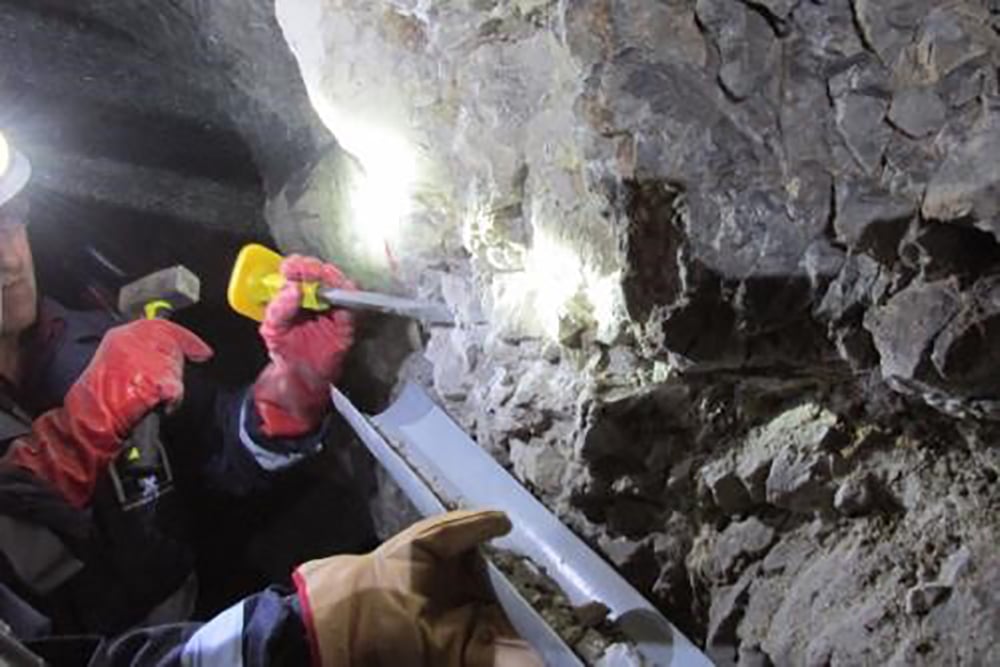
Ore sampling is one of the most critical stages in the exploration, extraction, and processing of minerals. Accurate sampling directly impacts the quality of analyses, production planning, mine profitability, and the efficiency of post-extraction processes, including leaching. In this article, titled “Comparison of 4 Ore Sampling Techniques,” we examine the details of four primary ore sampling methods.
Each of these techniques has unique characteristics that can enhance leaching efficiency and other related mineral processing operations. In the following sections, we analyze and compare the advantages, disadvantages, and applications of each method to enable precise decision-making for selecting the most suitable sampling technique for specific conditions.

Manual Sampling (Hammer or Scoop Method)
Manual sampling is one of the oldest and simplest methods in mineral exploration and geological investigations. It involves using hand tools such as a geological hammer, scoop, chisel, or direct manual collection. This method is commonly applied to surface outcrops, accessible ore faces, or rock formations. Due to its simplicity and low cost, it is often used during the early stages of exploration and preliminary surveys of new areas.
Procedure for Manual Sampling
In manual sampling, a geologist or researcher directly chips or separates small portions of rock or ore using hand tools. The process typically involves:
- Identifying suitable sampling points on the outcrop or ore face
- Breaking or detaching specific sections using a hammer or scoop
- Storing the collected samples in appropriate containers
Manual sampling is cost-effective and does not require advanced equipment, making it suitable for initial exploration and reconnaissance studies.
Advantages of Manual Sampling
- Low cost: Uses simple hand tools, minimizing execution expenses.
- Minimal equipment needed: Only basic tools like hammers, scoops, or chisels are required.
- Ideal for early exploration: Useful for initial resource identification and surface surveys.
- Accessible environments: Can be implemented in remote or difficult-to-reach areas without heavy machinery.
Disadvantages of Manual Sampling
- High human error: Reliance on manual operation and personal experience may result in errors of up to 30%.
- Inconsistent sample quality: Sample volume and quality can vary depending on local conditions and individual techniques.
- Limited depth: Applicable only to surface or accessible ore faces; unsuitable for deep sampling.
- Insufficient precision for advanced stages: Not ideal for detailed analysis or advanced exploration.
Applications of Manual Sampling
Manual sampling is ideal for preliminary mineral exploration, surface investigations, and initial resource identification. It is especially suitable for small-scale mines or low-budget projects due to its low cost and simplicity. For detailed analysis and subsequent stages, more advanced methods like drilling or indirect sampling are recommended.
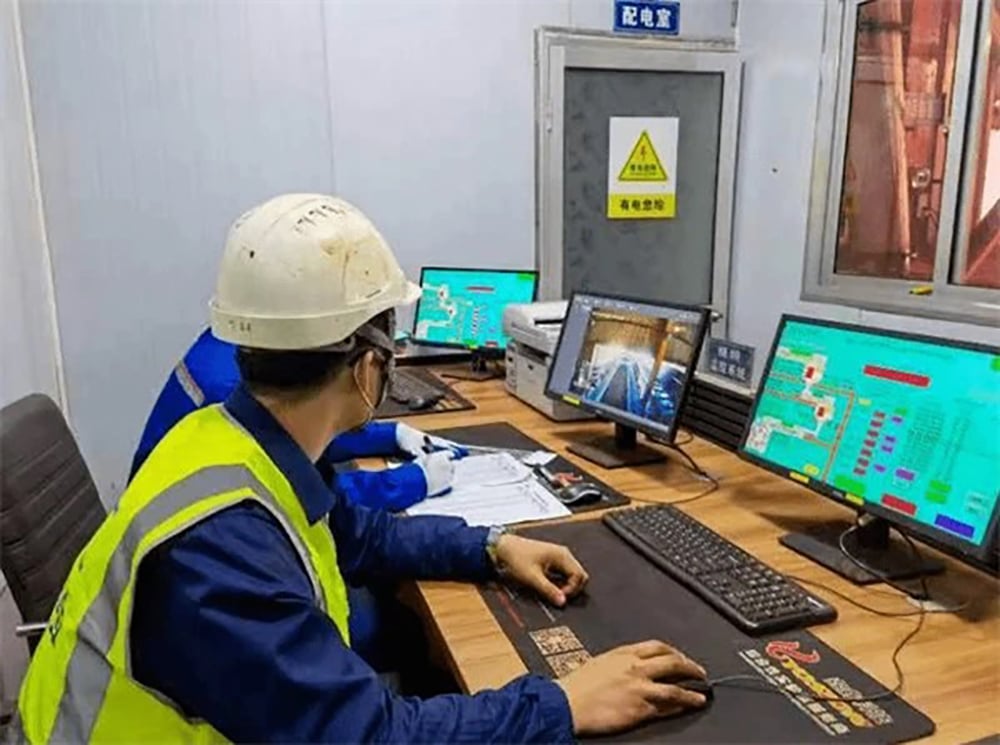
Rotary Drill Sampling
Rotary drilling is an advanced and precise ore sampling method using diamond or percussion drills. This technique allows sampling from depths of several hundred meters and provides accurate information about subsurface layer structures.
Procedure for Rotary Drill Sampling
Rotary drills penetrate rocks at high speeds, collecting core or rock fragments. This process relies on professional equipment and advanced technology, enabling deep penetration and precise sample collection.
Advantages of Rotary Drill Sampling
- High accuracy: Less than 5% error, providing detailed information about subsurface layer composition and structure.
- Deep sampling capability: Can collect samples from very deep layers, up to several hundred meters.
- Detailed stratigraphic information: Enables analysis of subsurface layer sequences.
Disadvantages of Rotary Drill Sampling
- High equipment and operational costs: Requires advanced machinery and significant energy input.
- Time-consuming: Drilling and sample collection are complex and slow.
- Requires experienced operators: Skilled personnel are needed, increasing labor costs.
Applications of Rotary Drill Sampling
Rotary drill sampling is ideal for large-scale, advanced exploration projects. Despite high costs and longer durations, it provides reliable and precise data, making it essential for major mining operations and geological research.
Mechanical Sampling
Mechanical sampling is an advanced method that uses automated devices and cutting systems. It is widely applied in industrial environments and mineral processing facilities, allowing precise and continuous sample collection.
Procedure for Mechanical Sampling
Automated sampling devices, such as cross-belt samplers and hammer samplers, are used to collect samples from moving materials on conveyors or production lines without direct human intervention:
- Cross-belt samplers: Collect transverse samples from moving material on conveyor belts.
- Hammer samplers: Mechanically obtain samples from solid materials or mixed ores.
Advantages for Mechanical Sampling
- Extremely high accuracy: Less than 2% error, making it one of the most precise sampling methods.
- Reduced human intervention: Automated devices minimize operator error.
- Continuous sampling: Capable of collecting ongoing samples from moving material streams.
Disadvantages for Mechanical Sampling
- High initial investment: Purchasing and installing automated systems is costly.
- Regular maintenance required: Systems need periodic servicing for optimal performance.
- Limited in certain geological conditions: Performance may decrease with very hard or soft materials.
Applications for Mechanical Sampling
Mechanical sampling is ideal for processing plants, conveyor systems, and industrial settings that require precise and continuous sample collection. It is widely used for quality control and production monitoring in large-scale operations.

Intelligent Sampling
Intelligent sampling is one of the newest and most advanced techniques, combining sensors, drones, robots, and real-time analytics to optimize exploration and mining production.
Procedure for Intelligent Sampling
This method integrates multiple technologies:
- LIBS (Laser-Induced Breakdown Spectroscopy): Provides immediate chemical composition analysis using lasers.
- XRF (X-ray Fluorescence): Determines elemental composition without laboratory tests.
- Drones and robotic samplers: Collect samples from hard-to-reach or hazardous areas.
- Real-time analysis with advanced sensors: Delivers instantaneous sample evaluation and integrates results with the overall system.
Advantages for Intelligent Sampling
- Extremely fast: Significantly accelerates sampling and analysis processes.
- Real-time analysis: Provides immediate results on-site.
- Reduced transport costs: Minimizes the need to send samples to laboratories.
- Enhanced safety: Reduces human exposure in hazardous areas.
Disadvantages for Intelligent Sampling
- Very high cost: Advanced technology and smart equipment require substantial investment.
- Specialized personnel required: Operation demands skilled technical experts.
- Limitations with certain ores: Complex chemical or physical structures may reduce analysis accuracy.
Applications for Intelligent Sampling
Intelligent sampling is ideal for high-tech mines and projects requiring fast, accurate, and safe analysis. While costs and technical requirements are high, it is the preferred method for large, managed, and advanced mining operations.