

 FA
FA AR
ARDesign of High-Pressure Equipment in Critical Industries

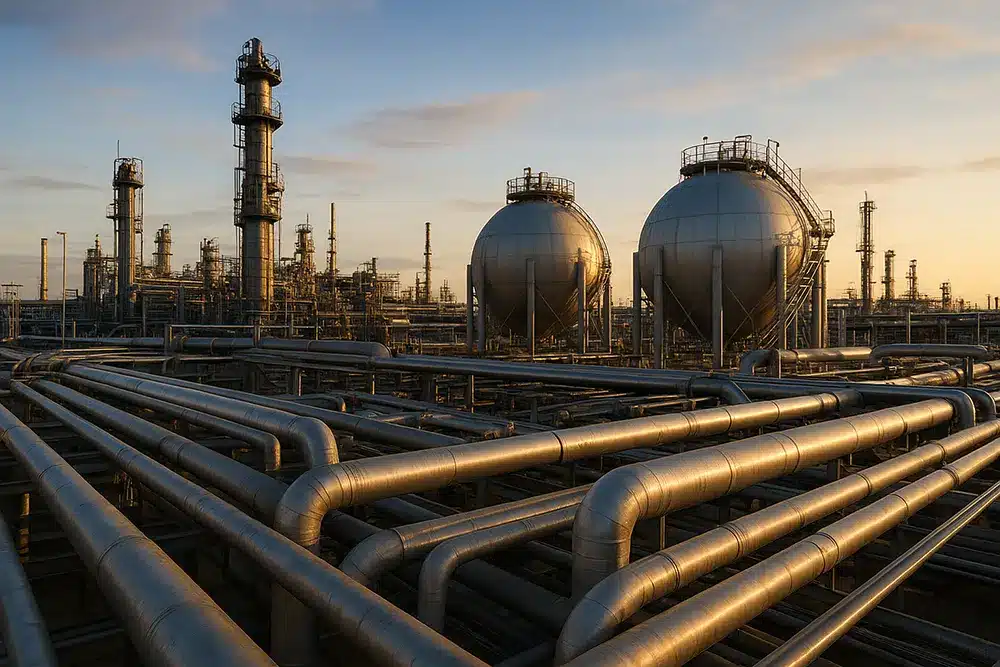
In today’s world, critical industries such as oil and gas, petrochemicals, pharmaceuticals, and nuclear energy require equipment capable of operating safely and reliably under complex and high-pressure conditions.
Designing high-pressure equipment for such sectors not only demands precise engineering knowledge and compliance with global standards, but also must consider safety, durability, energy efficiency, and ease of maintenance.
In this article, Farjad Engineering & Development Co. examines the key principles of high-pressure equipment design, the international standards involved, and the essential factors that must be considered during the manufacturing and operation of these systems.
The Importance of High-Pressure Equipment in Critical Industries
High-pressure equipment plays a vital role in industries such as refineries, chemical plants, and liquefied gas production facilities.
These systems are responsible for safely handling fluids, gases, and vapors under extreme temperature and pressure conditions. Even the slightest design flaw can lead to irreversible incidents and costly damages.
Therefore, companies specializing in the design and manufacturing of pressure vessels, industrial valves, and gas transfer systems place strong emphasis on adhering to safety principles and international engineering standards.
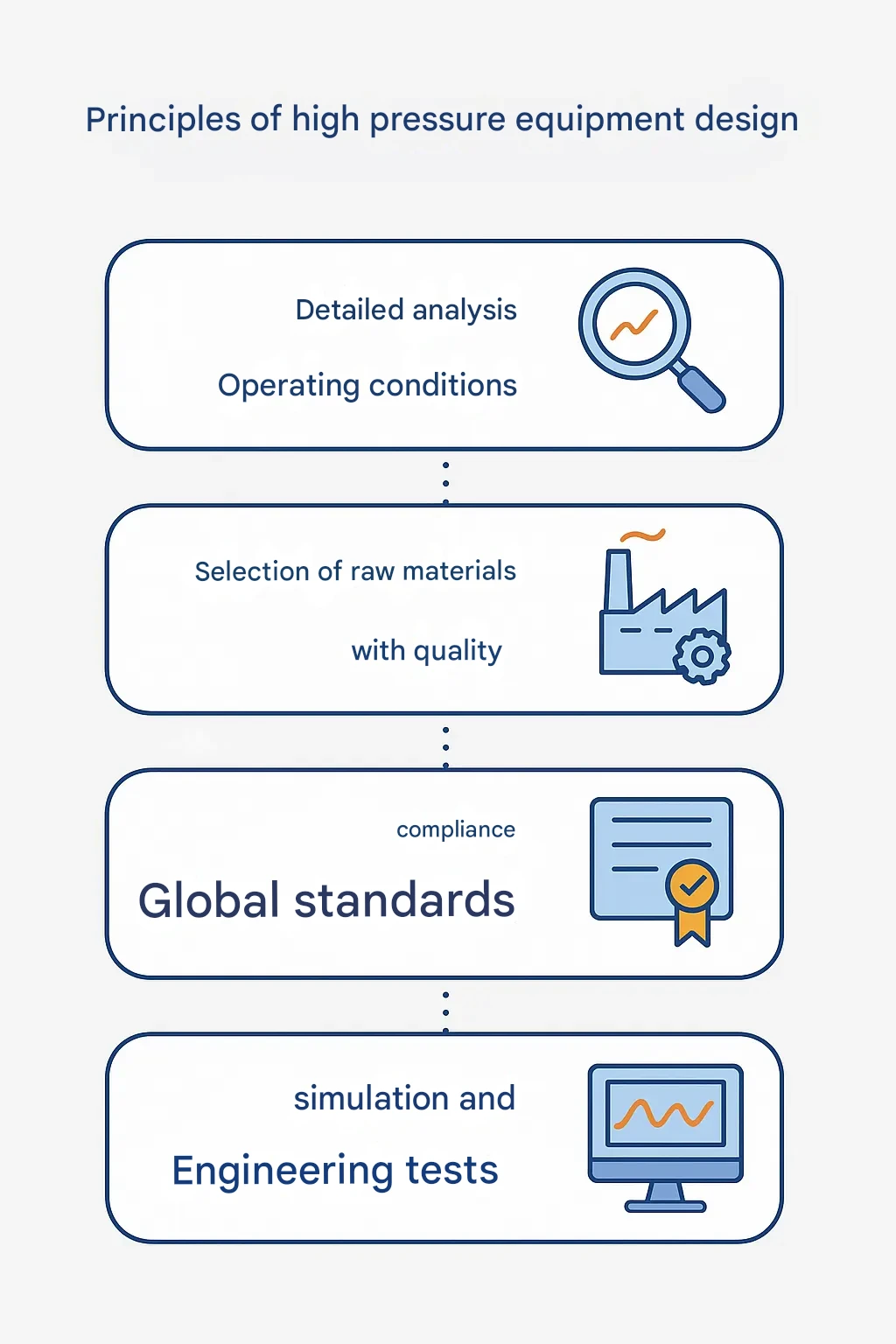
Fundamental Principles of High-Pressure Equipment Design
Designing high-pressure equipment in critical industries goes far beyond a routine engineering process.
It requires a combination of specialized knowledge, hands-on experience, and strict compliance with international design codes.
Three key pillars define this process:
- Accurate analysis of operating conditions
- Selection of appropriate materials
- Comprehensive testing and validation
Adhering to these principles ensures not only equipment safety, but also maximum operational efficiency and service life.
1. Detailed Analysis of Operating Conditions
The design process begins with a full understanding of the operating environment.
Factors such as working pressure, ambient temperature, fluid type, corrosion level, and erosion potential directly influence material selection and structural design.
For example:
- Equipment used in gas refineries must resist extremely high pressures and corrosive compounds.
- Equipment in pharmaceutical manufacturing must meet strict sterility and hygiene standards in addition to mechanical integrity.
A precise operational analysis helps engineers prevent costly design or manufacturing errors later in the process.
2. Selection of High-Quality Materials
One of the most critical aspects of high-pressure equipment design is choosing materials that can withstand corrosion, thermal shock, mechanical stress, and sudden pressure changes.
- In oil, gas, and petrochemical industries, stainless steels and nickel alloys are preferred due to their excellent corrosion resistance.
- In chemical or pharmaceutical plants, titanium alloys are ideal for their superior chemical resistance.
Selecting the right material not only increases equipment lifespan, but also reduces maintenance and downtime costs over time.
3. Compliance with International Standards
Manufacturing and operating high-pressure equipment safely is impossible without adhering to recognized international standards.
Key standards include ASME, API, ISO, and PED, which govern the design, construction, and testing of pressure systems.
- These standards define requirements for:
- Wall thickness and design pressure
- Material grades and alloy specifications
- Welding and assembly procedures
- Inspection, testing, and certification methods
Following these codes ensures that the equipment performs reliably under critical conditions while minimizing the risk of catastrophic failures.
4. Engineering Simulation and Testing
An essential phase in high-pressure equipment design is engineering simulation of real operating conditions, followed by physical testing to validate performance.
Modern design teams use advanced simulation software to analyze stress distribution, fatigue life, and material behavior under high-pressure loads.
Hydrostatic pressure tests are conducted to verify system integrity, while non-destructive testing (NDT) methods such as ultrasonic and radiographic inspection detect potential weld defects or cracks.
Conducting these tests ensures that each unit is fully qualified and safe for long-term operation in critical environments.
Safety Considerations in High-Pressure Equipment Design
Safety remains the core objective in the design of all high-pressure systems.
In high-risk industries, even minor design errors can lead to major operational or environmental hazards.
Designs must include protective mechanisms such as:
- Pressure relief valves
- Pressure and temperature sensors
- Automated emergency shutdown systems
For example, in LPG (liquefied petroleum gas) storage and transport systems, it is mandatory to integrate emergency venting and explosion protection systems to ensure safe operation.
Applications of High-Pressure Equipment Across Industries
High-pressure systems are fundamental to safe, stable, and efficient operations across a wide range of industries.
Through advanced engineering design, these systems enable precise control of gases and fluids under demanding conditions. Below are key applications in major sectors:
Oil and Gas Industry
In oil and gas operations, high-pressure equipment — including industrial valves, transfer pipelines, vaporizers, and pressure vessels — manage fluids and gases at extreme temperatures and pressures.
In refineries, these systems are vital for distillation and gas-liquid separation processes, while in transmission lines they help maintain system integrity and prevent leaks or explosions.
Because crude and natural gas contain corrosive compounds, designers use stainless steel and corrosion-resistant alloys, strictly following ASME and API standards to prevent costly failures and enhance safety.
Pharmaceutical Industry
In pharmaceutical manufacturing, high-pressure systems serve beyond fluid transfer — they are critical in sterilization, distillation, and active ingredient production.
These systems must not only endure pressure, but also comply with hygienic and contamination-free design requirements.
All internal surfaces must be polished, non-porous, and easily cleanable to prevent contamination.
Materials must resist oxidation and corrosion when exposed to aggressive chemicals.
Compliance with GMP (Good Manufacturing Practice) and FDA standards is essential for ensuring product quality and regulatory approval.
Energy and Power Generation
In thermal, hydroelectric, and nuclear power plants, high-pressure equipment is used to manage steam, gases, and fluids safely and efficiently.
These systems must operate reliably under extreme temperature and pressure fluctuations, as any malfunction can cause power outages or critical failures.
For this reason, engineers employ advanced stress analysis, fatigue simulation, and NDT techniques to guarantee long-term durability.
Regular monitoring and maintenance schedules are also implemented to ensure safety and system stability.
Challenges in Designing High-Pressure Equipment
Designing high-pressure equipment presents several challenges, including:
- Selecting materials with optimal performance and cost-efficiency
- Managing fabrication and maintenance expenses
- Meeting environmental and safety regulations
- Ensuring long-term reliability under complex operating conditions
The integration of modern technologies, such as real-time monitoring systems and AI-based performance simulations, plays a key role in overcoming these challenges and enhancing equipment reliability.
Conclusion
Designing and manufacturing high-pressure equipment in critical industries require deep technical expertise, adherence to global standards, and advanced engineering tools.
At Farjad Engineering & Development Co., we specialize in providing innovative, durable, and certified solutions that meet the highest levels of industrial safety and operational efficiency.
From pressure vessels and cryogenic systems to industrial valves and gas vaporizers, our high-pressure equipment is designed to withstand extreme environments and deliver consistent performance — ensuring the safety, reliability, and sustainability that modern industries demand.