

 FA
FA AR
ARPyrometallurgy: High-Temperature Processes for Metal Extraction and Refining

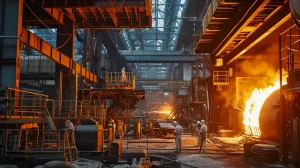
Pyrometallurgy is one of the most fundamental methods for extracting metals from ores, utilizing high temperatures to drive chemical reactions and convert raw materials into usable metals. In the world of pyrometallurgy — which focuses on thermal processes for metal extraction and refining — several techniques are used to transform mineral resources into valuable metallic products.
In parallel with pyrometallurgical operations, technologies such as leaching and Air Separation Units (ASU) play key supporting roles. Leaching extracts metals using chemical solutions, while ASU systems supply essential industrial gases such as oxygen and nitrogen, which are critical for combustion and oxidation in furnaces, blast operations, and arc processes.
This article provides a step-by-step overview of thermal processes in pyrometallurgy and compares five key pyrometallurgical techniques used across industries such as steelmaking, copper refining, gold processing, and nickel production.
What Is Pyrometallurgy?
Pyrometallurgy refers to a group of industrial processes that use high temperatures to extract or purify metals from their ores. Typically carried out in furnaces and powered by various fuels, these processes aim to convert mineral concentrates into pure metals or alloys suitable for industrial use.
Unlike hydrometallurgy, which relies on aqueous chemical reactions, pyrometallurgy depends primarily on thermal energy and reducing agents such as carbon or gas mixtures to separate metal oxides into pure metals.
Main Stages of Pyrometallurgical Processing
Pyrometallurgical operations consist of multiple stages, each selected based on the type of ore and desired metal purity. The major steps include:
Smelting
Smelting is one of the most common pyrometallurgical processes. It involves melting the ore at very high temperatures to separate the metal from impurities. For example, in copper extraction, chalcosite ore is melted in a furnace where carbon acts as a reducing agent to produce pure copper.
Reduction
Reduction involves heating metal oxides with reducing gases or solid agents to extract pure metals. This process is widely used in the production of iron, copper, and nickel. In ironmaking, hematite or magnetite ores are reduced using carbon in a blast furnace to produce pig iron.
Alloying
Alloying combines two or more metals under high temperatures to produce new materials with enhanced properties. For example, steel — an alloy of iron and carbon — exhibits high strength and corrosion resistance, making it vital in construction and manufacturing.
Refining
Refining removes impurities from crude metals through controlled heating or the use of reactive gases. For instance, in gold refining, molten gold is purified by thermal and chemical processes to achieve high-purity metal suitable for electronics and jewelry.
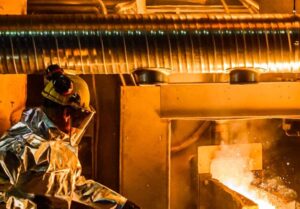
Five Key Pyrometallurgical Processes in Metal Production
Blast Furnace Process
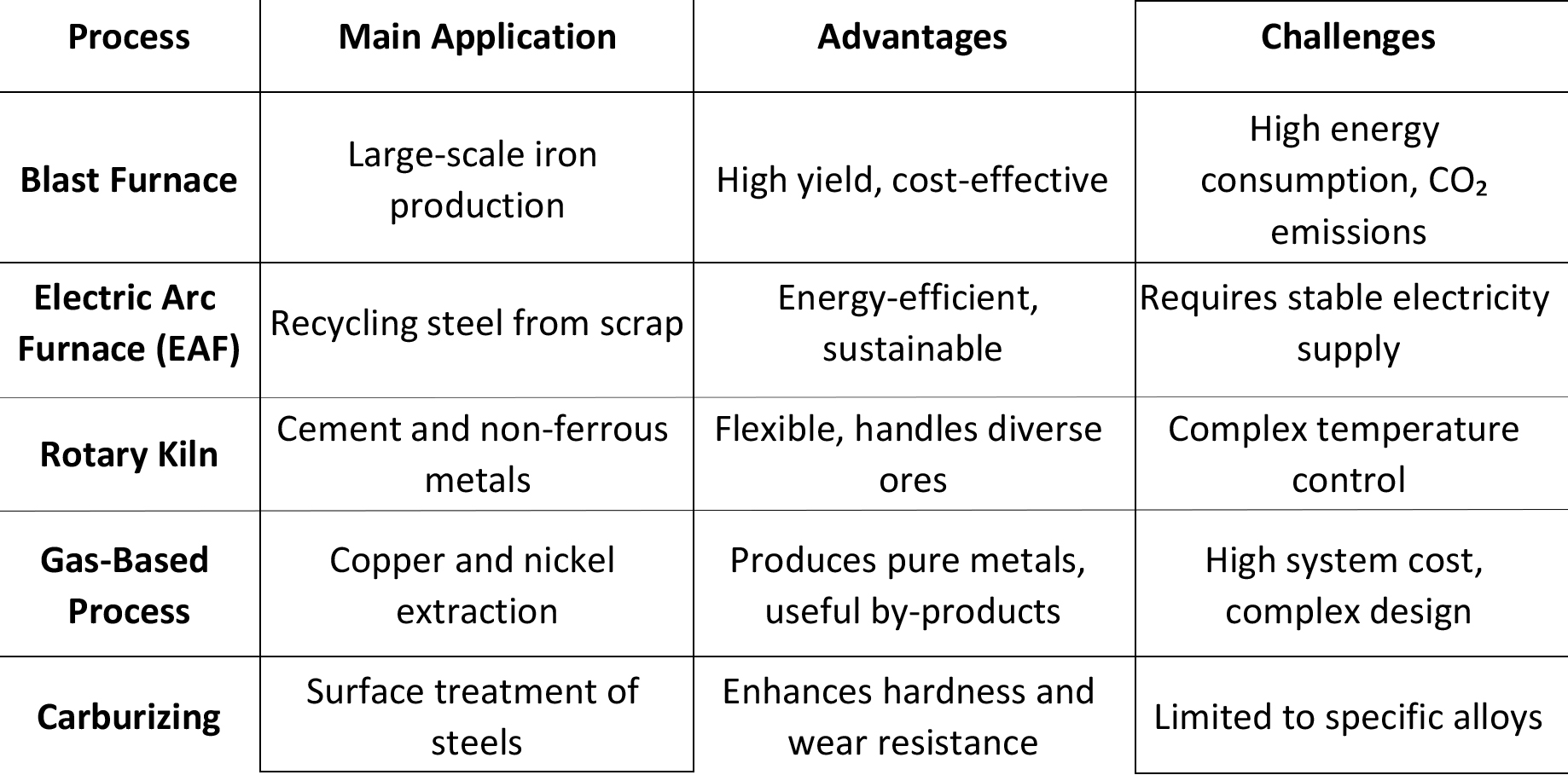
The blast furnace is one of the oldest and most widely used methods for extracting iron. In this process, iron ore is combined with coke and limestone and heated to approximately 1500°C. The result is molten pig iron, which serves as the base material for steelmaking.
Electric Arc Furnace (EAF) Process
The electric arc furnace method melts scrap metal using high-temperature electric arcs generated by graphite electrodes. This environmentally friendly process is ideal for recycling scrap steel and offers better energy efficiency and lower raw material costs.
Rotary Kiln Process
Rotary kilns are primarily used in cement manufacturing and the production of metals such as nickel and copper. Ores mixed with carbon and flux materials are fed into a rotating, high-temperature chamber, allowing chemical reactions to separate metallic components.
Gas-Based Process
In gas-based pyrometallurgy, ores react with high-temperature gases under pressure to form metallic compounds. This technique is commonly used for treating sulfide ores of copper and nickel, enhancing purity and yielding by-product gases beneficial for other industries.
Carburizing Process
Carburizing improves the surface hardness and wear resistance of steels and alloys by diffusing carbon into their surfaces at elevated temperatures. This process is critical in producing tools, gears, and high-durability components used in mining and heavy machinery.
Comparison of the Five Key Thermal Processes

Applications of Pyrometallurgy
Pyrometallurgy plays a central role in mining, metallurgy, and recycling industries. Its main applications include:
- Metal Extraction: Used extensively for extracting iron, copper, gold, nickel, and lead from their ores at high temperatures.
- Metal Recycling: Commonly applied in aluminum recycling and the recovery of precious metals from electronic waste through controlled smelting.
- Alloy Production: Enables the creation of specialized alloys for automotive, aerospace, and tool-making industries.
- Metal Refining: Improves purity and performance of metals by removing unwanted elements.